Lorem ipsum dolor sit amet, consectetur adipiscing elit. Ut elit tellus, luctus nec ullamcorper mattis, pulvinar dapibus leo.
If you like to apply for a South-North voluntary service in Germany, we kindly request you to submit your application via our online form: Application Form for Voluntary Services*. For this purpose, the following documents (in English) are required, which are uploaded via the form (please consider the file names and file format indicated in the brackets):
Where do I live during my volunteer service?
Accommodations vary; some volunteers live in volunteers’ houses, others have rooms within houses of guest families again others share rooms with another volunteer or have small apartments.
How are volunteers selected?
Before sending your application, you can always contact us to ask for potential places of assignment as the organisations and time of the vacancies vary. All applicants are asked to submit their application via our online form: Application Form for Voluntary Services. A CV, motivation letter (in English) and passport photo are needed to upload during this process. In some cases, we may ask you for a skype interview with the place of assignment before the selection. In case you are not contacting us via a sending organisation, you will be asked to contact additionally our partner organisation Dream School Foundation (DSF) in Bangalore, India or Catalyst for Change (C4C) in Da Nang, Vietnam, respectively.
What do the letters stand for and what does the BMZ do?
The German Federal Ministry for Economic Cooperation and Development (BMZ; German: Bundesministerium für wirtschaftliche Zusammenarbeit und Entwicklung), is a cabinet-level ministry of the Federal Republic of Germany. Its main office is at the former German Chancellery in Bonn with a second major office at the Europahaus in Berlin. Founded in 1961, the Ministry works to encourage economic development within Germany and in other countries through international cooperation and partnerships. It cooperates with international organisations involved in development including the International Monetary Fund (IMF), World Bank and the United Nations. In addition to partnering with the BMZ for the weltwärts programme, the DIZ also collaborates with the BMZ and respective partner organisations in India on the joint implementation of development projects.
Am I allowed to drive a car or a motorcycle in Germany?
You are not allowed to drive a car or a motorcycle.
Do I get food during the day at my place of assignment?
The places of assignment vary and not all provide lunch. Volunteers receive every month a certain amount of pocket money for self-supply (around 150 EUR).
Do I receive a qualified interim or final certificate?
At the end of the volunteer service, i.e. after completion of the returnee’s seminar each volunteer will receive a certificate of participation if you also completed at least 25 days of seminars (depending on the duration of your service).
What are the Child Protection Rules?
As the name suggests, those rules deal with children’s’ rights which are to be confirmed and to be complied with by the volunteer who signs the related child protection undertaking. Those volunteers working with children for example in a kindergarten or other vulnerable groups of people need to additionally sign a police clearance certificate (about which you will be informed accordingly).
What is a circle of sponsors and how could it work?
From German volunteers the DIZ warmly requests to contribute to the costs of the voluntary service with a personal contribution. Regarding Indian and Vietnamese volunteers we are aware of the income inequalities and all other difference but are nevertheless happy if any volunteer contributed to the costs – which is of course not compulsory. For this purpose, it makes sense to establish a circle of sponsors: Relatives, friends, former teachers, the parish, the neighbourhood, or companies can be members of your circle of sponsors – there are no limits to your imagination. At the beginning of the following year, every donor receives a donation receipt for the donation, which is then tax-deductible. For the DIZ, the purpose of the transfer must indicate that it is a donation for a specific volunteer or a specific volunteer activity.
What climatic conditions must I expect in Germany?
In most of Germany, the climate is moderately continental, characterised by cold winters, with average daily temperatures around 0 °C or slightly above, and warm summers, with maximum temperatures around 22-26 °C in July and August.
Although this changed during the last years when the climate change became noticeable with periodic heat waves and temperatures climbing to 35-40°C. The northernmost area (see Bremen, Hamburg, Lübeck, Rostock, Kiel) is slightly milder, but it’s also rainier and windier because of the influence of the Atlantic Ocean. The massifs of south-central Germany and the small portion of the Alps in the far south have a mountainous climate, which becomes of course colder as altitude increases.
Being that Germany is exposed to both mild air masses from the Atlantic Ocean and cold air masses from Russia or the North Pole, the weather is often unstable, with remarkable changes and different meteorological situations, such as cold, heat, wind, fog, snow and thunderstorms. During winter, snowfalls are quite frequent though generally not abundant (except in Bavaria and in the mountains, and sometimes in the north-eastern plain). Snow is more common across the eastern belt, from Bavaria to the plains of the former GDR and up to the Baltic coast, while it is rarer in the western part, from the Rhine corridor to north-west exposed to the North Sea.
What is the code of conduct?
Some of the places of assignment and / or accommodations have their own codes of conduct and are to be complied with. The codes may include rules or regulations regarding daily life (e.g. no smoking within the rooms; no visitors after midnight; not leaving the building when windows are open).
Do I receive a contract for my volunteering service?
All volunteers are sent to their respective places of assignment after signing a voluntary service agreement. This agreement is binding, and questions can be discussed in detail during the preparation seminar. Changes to the volunteer agreement (extension of the volunteer service, change of project, etc.) can only be made in writing.
Do I have to take care of flights by myself for travelling to Germany?
The DIZ books all international and national flights necessary for the volunteer service. E-tickets will be sent via e-mails in due time.
Do I need to know German before volunteering?
In some places of assignment, you do but the DIZ will let you know beforehand. This may require learning the language up to a certain level before your actual volunteer service. You can already start to learn A1 German (via app, or courses in your home country) already before coming to get familiar with the language.
Do I need to be vaccinated against something?
Not in general but it depends on the place of assignment. We will inform you accordingly.
What about allergies or food intolerances?
Please inform us beforehand so we can organise your stay accordingly.
Please note: The DIZ cannot replace medical advice. Nor can the mere provision of information on websites replace individual medical advice.
What basic things must I pay attention to in order not to get sick?
Fruits and vegetables should be washed and cleaned but you can drink tap water without cooking it before. Due to the seasonal weather changes, we highly recommend to dress appropriately according to the season. Especially in autumn and winter, wearing warm clothing in layers (e.g. undershirt, sweater, jacket, scarf) wearing waterproof/warm shoes and washing hands regularly prevent colds. In the cold season, daylight hours are shorter, which may affect mood and energy levels. Staying active and spending time outdoors during daylight as well as the intake of Vitamin D-3 can be helpful. Also, it is advised to ensure proper ventilation in your accommodation by airing rooms regularly (“Stoßlüften”) to prevent mould and improve air quality.
What medicines should I take with me?
In principle, all standard drugs are also available in Germany. Volunteers who need special medication should – as far as possible – take it with them from their home country. Medication in Germany can only be purchased in full packages and only at a reduced rate with a prescription from the doctor. In case of doubt you should contact the DIZ office.
What happens if I get seriously sick and you may have to see a doctor or to the hospital?
The contact person of the respective place of assignment and the DIZ should be informed immediately. All places of assignment have a list of doctors of different specialities that you can go to. They will help you in case you are sick.
How does the health insurance work?
You have a basic health insurance which includes visits at the doctor and if necessary, a stay at the hospital.
What insurances do I have?
Can I use the internet at my accommodation for free?
Yes, in most of the accommodations internet is included. BUT: there are restrictions regarding certain pages. There are websites promoting downloading or streaming films for free though most of them are illegal even if not explicitly advertised! The volunteer is fully responsible for his or her actions and therefore liable and punishable by law. Fines are not covered by the DIZ and must be paid by him- or herself! In case costs cannot be covered, they may be deducted from your pocket money, but can under no circumstances be borne by the DIZ or the host!
Can I do an internship additionally to the weltwärts service during my time as volunteer?
Short-term internships are possible and permitted when aligned with the place of assignment, the DIZ and with the principles of weltwärts.
What languages do I need to know in order to be able to participate in the volunteer service?
We expect the volunteers to be able to communicate fluently in English (written and spoken). For some of the places of assignment also knowledge of German (Level A2) is required right from the beginning. Language classes are financially supported by the programme. All volunteers have to be eager to learn German as it is absolutely necessary in daily life.
How much luggage can I take with me?
In principle, the weight limit is the weight indicated by the airlines: In international air traffic, a free baggage allowance of one piece of luggage with a maximum of 23 kg is usual. You should adhere to this specification, as additional weight costs extra, and the volunteers themselves are responsible for these costs. It should be noted that the free baggage allowance between international and national flights can sometimes differ considerably. Please check with the respective airlines after your flight has been booked.
Who is my contact person on site in Germany?
A mentor is assigned to the volunteers on site in Germany. The mentor will be available to discuss the status of the project and any problems with the volunteer at regular intervals. But of course you can also always contact the DIZ in case you think your issue hasn’t been addressed properly.
What does that mean, my own contribution?
75 percent of the costs of the weltwärts voluntary service are borne by the Federal Ministry for Economic Cooperation and Development (BMZ). The receiving organisation must cover the remaining 25 percent of the costs from its own funds. For this we would like to ask the volunteers for their support. We therefore suggest that volunteers ideally contribute to the costs of the voluntary service with a personal contribution. We would be happy to help you set up a support group!
Do I have to provide my own contribution already before the volunteer service?
No – as mentioned above; because the own contribution is not an obligation to participate in the weltwärts programme. Volunteers have time to take care of their own contribution during the entire service and beyond. However, we are happy if someone makes the effort to collect donations before leaving the country, as experience shows that it is easier when you are still in India / Vietnam and have the opportunity to talk to people. In addition, many high costs such as flight or insurance are incurred especially at the beginning of the voluntary service.
What kind of places of assignment exist?
Right now the DIZ has around ten places of assignment but the number of vacancies varies every year according to the length of the service done by the volunteers before you. They are in the social, administrative, religious and academic field.
Do I get money for my volunteer service?
Volunteers receive around 150 EUR every month as pocket money.
Please note: the pocket money – like the reimbursement of expenses – will be transferred to a current account of the volunteers in Germany. Therefore, you will have to open a bank account after your arrival. A transfer to a credit card account is not possible! A transfer to third parties (including parents) is not allowed!
Are there many differences between the traffic in your home country vs. the one in Germany?
The main difference is that in Germany, vehicles drive on the right side. Aside from this, major differences include the fact that the right of way belongs to the pedestrian but one should wait for the (green) walk sign or a zebra crossing before attempting to cross a street. Patience is key and running across a busy street is not ideal. Many people will also wait for a walk signal even in the middle of the night when there isn’t a vehicle in sight – this is optional. Smaller towns will be particularly disapproving if you do not respect the road signs, and it is preferable to wait for the green signal if there are small children in the vicinity. If you’re attempting to cross a street that does not have a walking signal, generally vehicles will stop to let you pass first. This is not applicable when crossing train tracks or tram lines. In the first week you can seek help from someone from your place of assignment to show you some common routes, like from your accommodation to your workplace, from accommodation to the city and experience different types of transport (bus, tram, train, S-Bahn, U-Bahn).
Can I use all trains, buses and trams?
Volunteers receive a ticket for the local public transport that is needed for getting from their home to their place of assignment. The kind of ticket a volunteer receives depends on the place of assignment. In Hesse most of the volunteers travel on a “Hessenticket” through the whole county. In Berlin, the ticket is only valid for Berlin. In Heidelberg the monthly ticket covers Heidelberg and its surroundings – hence, tickets and availability vary.
Are there discounts or general price differences between the different means of transport?
Train
The German train system covers the entire country and is a good way of getting around quickly. The main provider for trains is the “Deutsche Bahn”, however many private organisations also operate trains and use the track network (e.g. Flixtrain). If a ticket is bought (online or at the station) usage of private operators is allowed as well as the Deutsche Bahn. Public transport does not run all night through at all the places! Volunteers must make sure beforehand to check if they still come home. During certain hours, trams and trains will be less frequent and buses might be better connected. If you intend to travel a lot, it might be worth buying a BahnCard 25 which provides 25% discount on the ticket’s price. Sometimes it is possible to test the BahnCard for 3 months (all fares: https://www.bahn.de/). In general, German ticket fares increase closer to the date of departure. Reduced ticket prices can be found under “Sparpreisfinder” of the DB website (https://www.bahn.de/service/informationen-buchung/bestpreissuche). There is a DB App which is very handy. Some states also have a more local app for public transport that will provide details of connections to take and timings of trains/trams/buses within the area, for example the app in Hessen is “RMV”, and the one in Berlin is “VBB” or “BVG”. These are extremely helpful.
Bus
A good alternative for catching the train may be to use long-distance buses (e.g. Flixbus). This form of travelling may be a bit slower (and depends on the traffic), but it is cheaper and sometimes more direct, because other routes are covered than by the Bahn.
Taxi/Uber
Taxis are really quite expensive. Many cities also have “Sammeltaxis”. They operate a bit like normal busses and can be called. Another alternative is requesting Ubers in bigger cities.
Riding a bicycle
Riding a bicycle (bike) is (in most cities and towns) a fast and easy option to go from one place to another, it is often a lot easier and more flexible to get around than catching a bus. Of course, this only applies to relatively short distances. If you see walking paths which are paved in two colours, it normally means that one half is meant to be used by cyclists (generally the one closer to the street). Normally, there should also be a sign. It states that walkers and cyclists are allowed to use the path. If no such sign can be seen, you must ride on the street. Furthermore, it is important to note that technically cyclists have to follow the same rules as car drivers (always staying on the right, priority to the right, minding traffic signs, no driving after drinking etc.). Do try to stay on the right-hand side, though.
E-Scooter
Electric scooters may only be ridden on cycle lanes, cycle tracks or cycle paths and the same rules apply as for cyclists. If there is no cycle path, riders must use the road. Riding on pavements or motorways is strictly prohibited. Abiding by the traffic rules and the instructions by the various apps must strictly be followed (e.g. not parking the e-scooter in a way that it obstructs pedestrians).
How about travelling within Europe?
As soon as you get your residence permit for Germany, you will also receive a visa for the Schengen-area. This encompasses all member states of the European Union, except Great Britain and Ireland. You have to obtain a conditional e-Visa for Turkey as holder of the National D visa in Germany.
Which costs are normally covered?
In principle, the costs of travel to and from the accompanying seminars (preparatory, interim and returnee’s seminars), the costs of public transport during the seminars, accommodation and meals during the voluntary service, the costs of an introductory language course in Germany, the costs of health insurance as well as liability and accident insurance in accordance with the guidelines. In addition, the international flights and, if necessary, national flights to the places of assignment as well as the professional and pedagogical support by the sending and partner organisation from the selection to the sending and follow-up.
What costs do I have to put down? What do I have to consider when filling out the reimbursement form?
You may have to disburse some costs (monthly travel, material for language classes, visa costs for renewing the visa) and will have to complete the reimbursement form. Please always keep the original receipts!
Which seminars are offered? Are the seminars obligatory?
The DIZ organises three obligatory seminars for weltwärts volunteers:
The preparation seminar takes place in India / Vietnam before the departure and includes organisational matters (visa application etc.) as well as the preparation for the conditions in Germany. The participants will receive the seminar plan in advance. The interim seminar takes place during the voluntary service in Germany and serves to discuss the situation together and to deal with challenges and problems. During the returnee’s seminar the participants should reflect on their experiences and find ways to pass on their newly acquired knowledge as multipliers in India / Vietnam. All seminars are obligatory. It is not possible to leave the country without participating in the preparatory seminar. If you cannot attend individual seminar days for any reason, these must be made up for, otherwise no weltwärts certificate can be issued.
Where can I go shopping? For example, food or clothes?
Food
Unlike in countries further to the south, the cheapest food in Germany is to be found in the supermarkets (particularly in ‘Discounters’ such as Aldi, Lidl or Penny) while on the street markets food is usually more expensive. Having said that, fruits, vegetables and meat on the street are locally produced while a large amount of food in the supermarkets is imported. Supermarkets usually open from 8 am till 10 pm (or longer), while the markets vary in their opening hours and will only take place on set days of the week.
Clothes / Items
While there are many really cheap brands from which you can buy cheap clothes throughout the year and for all seasons (handmade by children workers), we definitely recommend checking out flea markets or second-hand shops (e.g. Oxfam). There are even designated flea markets for women/girls and though they want an entry fee, normally it pays off as you can find there everything you need (or don’t need) – plus, it is much more sustainable than buying anything new. Furthermore, there are a couple of resale apps for second-hand items (e.g. Vinted, Ebay Kleinanzeigen) but those have to be treated with great care to avoid scams.
Cosmetics / Hygiene Products
Most of the supermarkets have a small assortment though it is recommended to look for drugstores (more products, better prices) like dm, Rossmann, Müller, etc.
Medicine
Medicine available on prescription is only available at pharmacies.
Technical Stuff
There are different big stores just dealing with software and hardware (e.g. Saturn, Media-Markt, Konrad).
Can I stay in Germany after my volunteer service?
No. Your visa is restricted to your service and therefore also your stay in Germany.
I do not have an Indian / a Vietnamese nationality – am I still allowed to do a voluntary service through the weltwärts programme?
This is possible as long as you can prove a permanent right of residence in India / Vietnam and the DIZ has received the approval of the coordination office weltwärts for the assignment.
Can I take a break during my volunteer service?
Every volunteer has at least 20 working days off during his or her service of 12 months (not including Saturdays). Some volunteers work at institutions with regular vacation times and are obliged to align their vacation with the places of assignment. On any account, days can only be taken off in accordance with the place of assignment. The 20 working days off are not to be counted additionally but within the days of regular vacation of the place of assignment!
All volunteers partaking in the weltwärts-South North Programme at DIZ require a renewed Measels Vaccination and Health Check-Up. Some Places of Assignment (especially those who work with vulnerable groups of people e.g. children) might ask for a Police Clearance, additionally.
What kind of visa do I need?
Volunteers will need a national visa D for their stay in Germany. For this visa they will receive many documents from the DIZ, but it is on them to organise an appointment with the German consulate at the respective city in India / Vietnam.
Your Visa Documents | Explanation | Action | Additional Action |
BFD-Vereinbarung (Präambel…) | BFD Contract | Sign and take with you to the consulate | Scan the whole document and mail to DIZ |
Zusatzvereinbarung | Supplementary Agreement to the BFD contract | Sign and take with you to the consulate | Scan the whole document and mail to DIZ |
3 Begleitschreiben (DIZ; Engagement Global und Einsatzstelle) | 3 Accompanying letters (DIZ; Engagement Global, Place of Assignment) | Take with you to the consulate |
|
BMZ Visumbegleitschreiben | Accompanying letter from the BMZ | Take with you to the consulate |
|
Versicherung Dr. Walter | Health Insurance | Take with you to the consulate |
|
Can friends or family visit me during my stay in Germany?
Friends or family visits are welcome during your stay but have to be financed by them or yourself. During the first two months volunteers are asked to not be visited as this is the time when you are supposed to integrate into the project and your assignment. Visits require the prior permission of the respective landlord of your volunteer accommodation.
What is weltwärts anyway?
The development volunteer service weltwärts was founded in 2008 by the German Federal Ministry for Economic Cooperation and Development (BMZ). Since then, more than 50,000 volunteers have been sent from Germany and dedicated themselves to development projects. Since 2013 young people from partner countries have also been able to do development volunteer service in Germany. By the end of 2025, around 5,000 young people had made use of this opportunity. weltwärts focuses on joint intercultural learning.
NORTH-SOUTH VOLUNTEERING:
The funding by the German Federal Ministry for Economic Cooperation and Development (BMZ) has given all interested young German people between the ages of 18 and 28 the opportunity to participate in the volunteering service. The majority has just finished school and completed their A levels (Abitur). They volunteer for six to 24 months at a local partner organisation in education, health, environment, agriculture, culture or human rights. They are integrated in the partner organisation, support the employees in their work and gradually assume their own responsibilities. The volunteers gain experience abroad and acquire knowledge of the language, cultural and socioeconomic context of the partner country and personal competencies. After their service, the returning volunteers continue to dedicate themselves to development work in their homelands. As a result, they bring their experiences and learnings back to society and make a personal contribution to a fairer world through their assignment abroad. The places of assignment benefit from the fact that young people who are interested in development subjects and cultural exchange support their projects with their own experiences and points of view. In addition to the practical work during their service, the volunteers often also support the projects to which they were assigned after their return, for example, by providing information or collecting donations.
SOUTH-NORTH VOLUNTEERING:
Similarly, young people from partnering countries of the DAC-list aged 18-28 can volunteer within the frame of the weltwärts programme for 12 to 18 months. Besides the volunteers, roughly 120 active sending organisations and numerous partner organisations in the countries of assignment are the main actors at weltwärts. They implement the programme in close collaboration and make a considerable contribution to its design. Since 2012, weltwärts has been combined with other institutions, programmes and initiatives in domestic development work under the umbrella of Engagement Global gGmbH. Engagement Global forwards the subsidies to the sending organisations in Germany and advises them on the implementation of the programme.
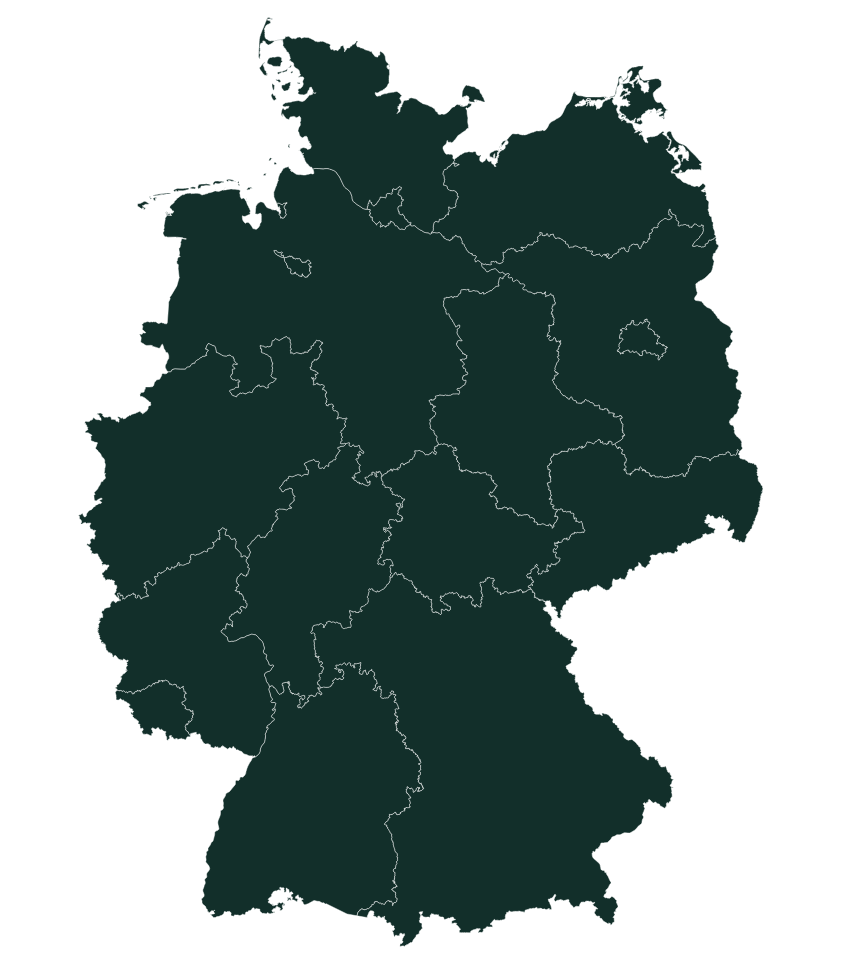
DIZ-Geschäftsstelle, Frankfurt
Lorem Ipsum is simply dummy text of the printing and typesetting industry.
Ev. Luthergemeinde, Frankfurt
Lorem Ipsum is simply dummy text of the printing and typesetting industry.
KiTa Kids Bockenheim, Frankfurt
Lorem Ipsum is simply dummy text of the printing and typesetting industry.
Veggie Kids e.V., Frankfurt
Lorem Ipsum is simply dummy text of the printing and typesetting industry.
Ev. Stiftung, Arnsburg
Lorem Ipsum is simply dummy text of the printing and typesetting industry.
Ev. Dekanat, Gießen
Lorem Ipsum is simply dummy text of the printing and typesetting industry.
Bietigheim-Bissinger Tafel e.V.
Lorem Ipsum is simply dummy text of the printing and typesetting industry.
Ev. Kirchenkreis, Dortmund
Lorem Ipsum is simply dummy text of the printing and typesetting industry.
Freie Schule Mittelweser, Steyerberg
Lorem Ipsum is simply dummy text of the printing and typesetting industry.
Sportverein Grün-Weiß Eimsbüttel, Hamburg
Lorem Ipsum is simply dummy text of the printing and typesetting industry.
Next Level e.V., Erfurt
Lorem Ipsum is simply dummy text of the printing and typesetting industry.
FACE-Familienzentrum, Berlin
Lorem Ipsum is simply dummy text of the printing and typesetting industry.
Kirchengemeinde Alt-Wittenau Berlin sowie diverse KiTas
Lorem Ipsum is simply dummy text of the printing and typesetting industry.
Cras eget leo in quam euismod viverra et luctus tellus. Nullam porta euismod est sodales cursus. In lacinia, mauris quis volutpat tempor, nulla turpis vulputate magna, ut elementum turpis leo vel libero.
Cras eget leo in quam euismod viverra et luctus tellus. Nullam porta euismod est sodales cursus. In lacinia, mauris quis volutpat tempor, nulla turpis vulputate magna, ut elementum turpis leo vel libero.
Cras eget leo in quam euismod viverra et luctus tellus. Nullam porta euismod est sodales cursus. In lacinia, mauris quis volutpat tempor, nulla turpis vulputate magna, ut elementum turpis leo vel libero.
Cras eget leo in quam euismod viverra et luctus tellus. Nullam porta euismod est sodales cursus. In lacinia, mauris quis volutpat tempor, nulla turpis vulputate magna, ut elementum turpis leo vel libero.
Cras eget leo in quam euismod viverra et luctus tellus. Nullam porta euismod est sodales cursus. In lacinia, mauris quis volutpat tempor, nulla turpis vulputate magna, ut elementum turpis leo vel libero.
Cras eget leo in quam euismod viverra et luctus tellus. Nullam porta euismod est sodales cursus. In lacinia, mauris quis volutpat tempor, nulla turpis vulputate magna, ut elementum turpis leo vel libero.
Cras eget leo in quam euismod viverra et luctus tellus. Nullam porta euismod est sodales cursus. In lacinia, mauris quis volutpat tempor, nulla turpis vulputate magna, ut elementum turpis leo vel libero.
Cras eget leo in quam euismod viverra et luctus tellus. Nullam porta euismod est sodales cursus. In lacinia, mauris quis volutpat tempor, nulla turpis vulputate magna, ut elementum turpis leo vel libero.
Cras eget leo in quam euismod viverra et luctus tellus. Nullam porta euismod est sodales cursus. In lacinia, mauris quis volutpat tempor, nulla turpis vulputate magna, ut elementum turpis leo vel libero.
Cras eget leo in quam euismod viverra et luctus tellus. Nullam porta euismod est sodales cursus. In lacinia, mauris quis volutpat tempor, nulla turpis vulputate magna, ut elementum turpis leo vel libero.
Cras eget leo in quam euismod viverra et luctus tellus. Nullam porta euismod est sodales cursus. In lacinia, mauris quis volutpat tempor, nulla turpis vulputate magna, ut elementum turpis leo vel libero.
Cras eget leo in quam euismod viverra et luctus tellus. Nullam porta euismod est sodales cursus. In lacinia, mauris quis volutpat tempor, nulla turpis vulputate magna, ut elementum turpis leo vel libero.
Cras eget leo in quam euismod viverra et luctus tellus. Nullam porta euismod est sodales cursus. In lacinia, mauris quis volutpat tempor, nulla turpis vulputate magna, ut elementum turpis leo vel libero.
All weltwärts volunteers participate in a preparatory seminar beforehand, an orientation seminar at their placement site during their service, an interim seminar, and a follow-up seminar at the end of their volunteer service in Germany. Participation in all seminars is mandatory.
In the preparatory seminar, volunteers explore German culture and history and learn a great deal about local conditions. The seminar also covers practical information regarding visas and travel arrangements.
During the orientation phase, they become familiar with all relevant areas of their German placement, learn practical skills for daily life, and are introduced to their supervisors and mentors.
The mid-program seminar serves as an opportunity to exchange ideas with other volunteers, reflect on their experiences so far, and look ahead to the remaining months.
During the follow-up phase, the volunteers reflect on their experiences.
Please check this site: weltwärts-Freiwilligendienst